TrendThread Journal
Flapper, but make it fall: wearing the 1920s in 2026
Fringe, drop waists and art-deco beading are bringing 1920s flapper style into fall 2026. How to wear 1920s flapper-inspired fashion in real life — one deco detail at a time, without ever looking costumed.
The runway signal: why the 1920s are back
Fashion revisits the 1920s roughly once a decade, and fall 2026 is the moment. The trigger was a wave of collections built on fringe that moved, drop waists that skimmed, and beadwork with unmistakable art-deco geometry. But the deeper reason is mood: after several seasons of minimalism, there is appetite for ornament — for clothes that celebrate rather than whisper. The 1920s offer the perfect template because flapper style was itself a rebellion: against corsetry then, against restraint now. What matters for real wardrobes is that designers translated the era rather than replicating it. No one is suggesting a full Gatsby costume; the 2026 version is about borrowing the vocabulary — fringe, geometry, shine — and speaking it with a modern accent. Vogue’s runway coverage has tracked the 1920s revival across multiple collections this season.
No one is suggesting a full Gatsby costume; the 2026 version is about borrowing the vocabulary — fringe, geometry, shine — and speaking it with a modern accent.TrendThread runway desk
The one-deco-detail rule
The golden rule of 1920s flapper-inspired fashion in 2026: one deco detail per outfit. A fringed jacket over plain denim. An art-deco earring with a simple black dress. A beaded clutch carried with an otherwise minimal look. The single statement reads as fashion; two or more start reading as theme party. This discipline is what separates the trend’s chic adopters from its casualties. Start with accessories, which are the lowest-risk entry: they deliver the era’s geometry and shine in a dose you can remove. A single deco piece also photographs beautifully, which matters in a season built around events and gatherings. Our journal’s one-detail method applies perfectly here — the same restraint, a jazzier vocabulary.
| Detail | How to wear it | Drama level |
|---|---|---|
| Fringe jacket | Over a slip skirt and boots | High |
| Art-deco earrings | With a black turtleneck | Medium |
| Drop-waist top | Over slim trousers | Low |
| Beaded clutch | With an otherwise minimal dress | Medium |
One statement piece reads as fashion; two or more start reading as theme party. Start with accessories — they deliver the era’s geometry and shine in a dose you can remove.
Fringe without the costume
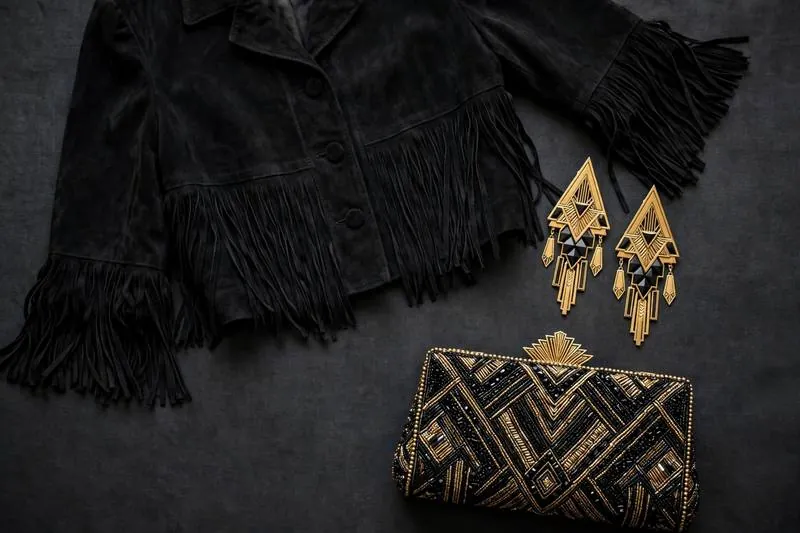
Fringe is the trend’s headline act, and it is gloriously wearable when you control the volume. A cropped fringe jacket over a slip skirt and boots is the fall-uniform version — the fringe moves when you do, which is the whole pleasure of it. Keep the fringe to one garment; let everything else stay clean and modern. Shorter fringe (a few inches) reads contemporary, while floor-grazing strands tilt theatrical — choose your drama level deliberately. Suede fringe ties this trend neatly to the season’s texture story, and a fringed hem on an otherwise simple knit skirt is the subtlest possible entry point. Whatever you choose, the fringe should be the outfit’s verb — the thing that moves — while the rest stays still.
The drop waist, modernized
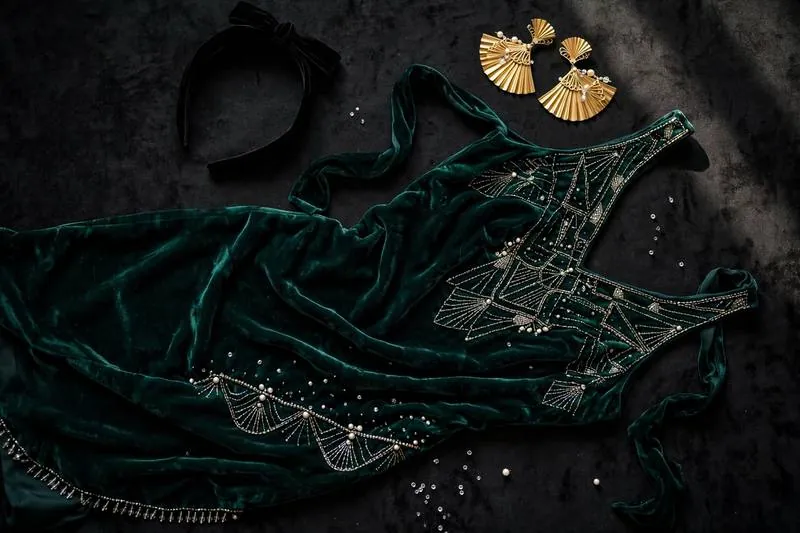
The drop waist — where the waistline sits at the hip — is the silhouette half of the flapper equation, and it is the trickiest to wear. The 2026 solution is the partial drop: dresses and tops where the waist seam sits a few inches below the natural waist rather than at the full hip, preserving some shape while nodding to the era. A drop-waist dress in a fluid fabric skims rather than boxes, which is the difference between flattering and shapeless. If the silhouette still feels risky, try it first in a top: a drop-waist blouse over slim trousers gives you the line without committing the whole outfit. Petite frames should favor the partial drop and keep hemlines above the knee to preserve proportion.
Art-deco accessories do the heavy lifting
If garments feel like a leap, accessories carry the entire trend on their own. Art-deco earrings — geometric drops, fan shapes, stepped lines in gold — are the single highest-impact purchase: they frame the face, catch light, and telegraph the era instantly. Gold art-deco earrings with a black turtleneck is a complete evening look with almost no effort. Headbands with beading or a low, sleek chignon nod to the era’s hair without a curling iron. A beaded or mirrored clutch finishes the story for events. The throughline: geometry and shine, kept to one or two pieces. Browse our curated picks for deco-leaning accessories that work beyond a single season.
- Pick exactly one deco detail per outfit
- Keep fringe to a single garment
- Modern hair and makeup: sleek, not finger-waved
- Shorter fringe reads contemporary; long reads theatrical
- Gold geometric accessories over costume jewelry
For party-season inspiration beyond this guide, Harper’s Bazaar’s evening edit and Refinery29’s party dressing guide are both worth bookmarking.
Evening versus daytime: calibrating the drama
The trend scales. For daytime, keep it to texture and line: a fringed scarf, a deco-print blouse under a blazer, a drop-waist top with jeans. The references stay legible but quiet. For evening, turn one dial up: the beaded dress, the full fringe jacket, the dramatic earring — still just one dial. Holiday season is this trend’s natural habitat; a flapper-nod dress is arguably the most interesting thing you can wear to a December party that isn’t another sequin sheath. Whatever the setting, modern hair and makeup keep the look anchored in 2026 — sleek rather than finger-waved, a clean lip rather than a cupid’s bow. The era is the inspiration; the present is the address. And because the trend is built on accessories and single statement pieces rather than full outfits, most of what you buy for it will still work next fall, long after the runway moment passes.
Part of the TrendThread hubs: Fall 2026 hub