TrendThread Journal
Best Winter Coats for Women 2026: The Full Guide
The flagship winter coat guide: every silhouette that matters in 2026, how warm each one really is, what to pay at every budget, and how to style it for your body, your job, and your actual weather.
Picture this: it is 28 degrees, the wind is doing its best to ruin your hair, and you are standing on the platform in the same sad coat you have worn for three winters straight — the one that is warm enough only if you never actually go outside. Now imagine the same morning in one of the best winter coats for women 2026 has produced: a long camel wool coat that falls past your knees, a cream knit underneath, boots that can handle slush, and you look like you meant it. Same commute, same freezing platform, completely different woman getting on the train. That is the whole point of this guide. A winter coat is the most expensive thing most of us buy all year, it is the thing strangers see before they see anything else you are wearing, and most of us buy it wrong — too short, too thin, or so trendy it looks tired by February.
This is the flagship guide, the one we update every angle for: every silhouette that matters this winter, how warm each one really is, what to pay at every budget, and how to style it for your body, your job, and your actual weather. The best winter coats for women 2026 are not the bulkiest or the priciest. The right one is warm enough for your coldest day, comfortable over the layers you actually wear, and good-looking enough that you reach for it every single morning. Let us find yours.
From Wartime Wool to the Puffer Boom: A Very Short History of the Winter Coat
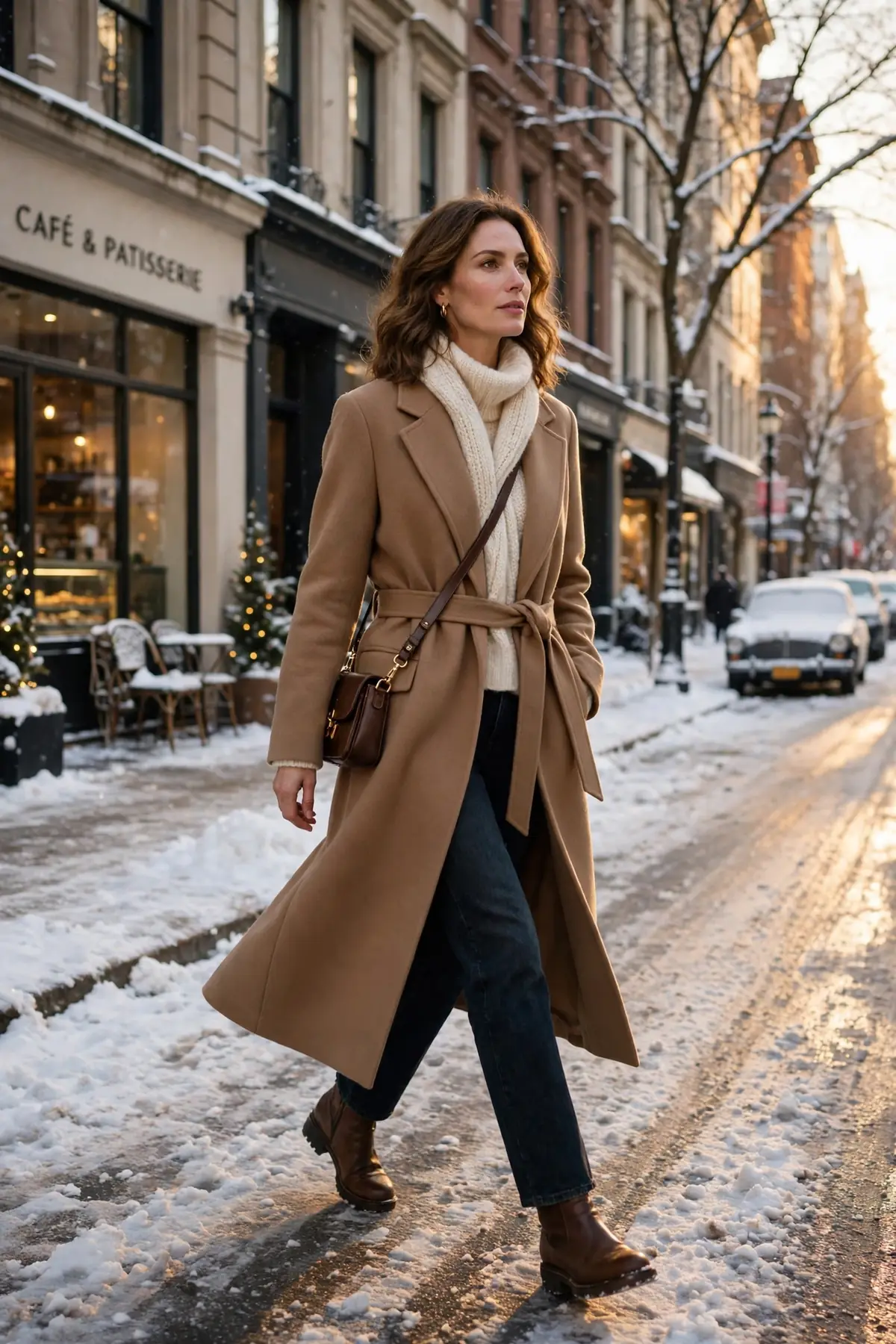
The winter coat did not start as fashion. It started as survival — heavy wool greatcoats cut for soldiers and sailors, built to keep a body alive in weather that did not care about your outfit. After the wars, tailors took that same wool and cut it for civilians, and the long wool coat became the uniform of the well-dressed city woman for most of the twentieth century: think of the camel coats of the 1970s, the power shoulders of the 1980s, the minimalist Max Mara wrap coats that still define quiet luxury today. A good wool coat was an investment piece, bought once and worn for a decade, and grandmothers were not wrong to treat it that way.
Then came the puffer. Down-filled nylon jackets were mountaineering gear until the 1990s, when streetwear and then luxury fashion adopted them, and by the 2010s the long puffer had gone from ski slopes to school runs. The 2020s finished the job: the Aritzia Super Puff became a household name, The North Face parkas turned up on every campus, and suddenly warmth was a fashion statement instead of an apology. What changed for winter 2026 is that the two histories finally merged. The runways and the high street agree on the same idea: coats that are genuinely warm and genuinely beautiful, with no trade-off required. The tailored wool coat learned from the puffer, and the puffer learned from the tailor.
Hot take number one: everyone says you need one perfect coat. They are wrong — you need one perfect coat for your coldest days and one you love for everything else. The woman who buys a single do-everything coat usually ends up with a coat that does nothing brilliantly. Two coats, chosen well, beat one expensive compromise every time.
The 7 Coat Silhouettes That Matter in Winter 2026
Before you shop, learn the seven silhouettes, because every coat on the market this winter is a version of one of them. First, the long wool coat: single or double-breasted, hitting below the knee or at the shin, in camel, black, grey or chocolate. It is the most polished option and the one that makes jeans look intentional. Second, the long puffer: knee-length or longer, filled with down or synthetic insulation, with a hood. It is the warmest thing you can buy, full stop. Third, the teddy coat: curly faux shearling, usually cream or caramel, cosy and slightly oversized — the hug of the coat world. Fourth, the faux fur coat: shorter and more glamorous, the evening and statement option. Fifth, the parka: waterproof, hooded, often with a fur-trim or faux-fur-trim hood, built for wet snow and wind. Sixth, the cape coat: structured at the shoulder, flaring over the body, the season's most elegant silhouette for milder days. Seventh, the belted wool trench: a wool coat with a tie waist and a trench silhouette, for the woman who wants a waistline without a fitted coat.
Search data backs up the timing: interest in women's winter coats climbs from September, peaks in December, and the long wool coat is consistently the most-searched shape. That December peak is your deadline and your opportunity — shop now, while sizes and colours are still in stock, and the Black Friday sales are doing their best work. The silhouettes below are ranked by what they solve, not by hype, because the coat that solves your problem is the best winter coat for you.
One more thing before the details: fit is the whole game. A coat should close over your thickest sweater without pulling, the shoulder seam should sit on your actual shoulder, and the sleeves should reach your wrist bone. If a coat fails any of those three tests in the shop, it will fail them all winter. No amount of styling fixes a coat that does not fit.
How Warm Is Warm Enough? Fill Power, Wool Percentage and Temperature Ratings
Coat shopping has a language problem: brands throw numbers at you — fill power, grams of insulation, wool percentages, temperature ratings — and none of them mean the same thing twice. Here is the translation. Fill power measures how much space one ounce of down fills; 600 is good, 700 to 800 is excellent, and above 800 is the luxury tier. But fill power alone tells you almost nothing, because warmth depends on how much down is inside, not just how fluffy it is. A coat with 800 fill power and very little of it is colder than a coat with 600 fill power stuffed full. Always check the fill weight or the temperature rating alongside the fill power, and be suspicious of any coat that trumpets one number and hides the other.
Wool works differently. A wool coat's warmth comes from fibre density, weave tightness and lining, and the number that matters most is the wool percentage on the label. A coat that is 90 percent wool and 10 percent cashmere, fully lined, will outperform a 50 percent wool blend at twice the price. Below 50 percent wool, you are mostly buying the shape, not the warmth — fine for a mild winter, a mistake for a real one. Synthetic insulation, meanwhile, has quietly become excellent: modern synthetics keep you warm when wet, which down does not, and they cost far less. For rainy winters and slushy cities, synthetic is often the smarter buy.
Temperature ratings are the least standardised number in the industry — one brand's minus 20 is another brand's minus 5 — so treat them as a rough guide and trust the construction instead: a windproof shell, a sealed or storm-placket front, a high collar, and cuffs that close. Wind is what makes you cold, far more than the temperature on the thermometer. A coat that blocks wind at 20 degrees feels warmer than a coat that lets it through at 30.
| Coat type | Best for | Warmth | Price range |
|---|---|---|---|
| Long wool coat | Work, evenings, polished everyday looks | Medium — needs a knit underneath | $120–$600 |
| Long puffer (down) | Freezing commutes, coldest days | Highest — rated to -20°F and below | $150–$900 |
| Teddy coat | Weekends, casual days, cosy layering | Medium-high — wind sneaks through | $80–$350 |
| Waterproof parka | Wet snow, rain, windy cities | High — best in wet cold | $180–$700 |
| Faux fur coat | Evenings, parties, statement looks | Medium — style first, warmth second | $100–$400 |
| Cape coat | Mild days, occasions, over dresses | Low-medium — beautiful, not a furnace | $130–$500 |
| Belted wool trench | Shoulder season, defined waist, travel | Medium — layers well | $140–$550 |
The Long Wool Coat, Done Right
The long wool coat is the one to buy first if you buy only one coat this year, and the women's long winter coats that earn their price all share the same DNA: a wool-cashmere blend of at least 80 percent wool, a full lining, a length that hits below the knee, and a cut with room for a chunky knit underneath. Camel is the classic — it goes with black, denim, cream, burgundy and grey, which is to say everything you already own — but chocolate brown is the 2026 update, richer and slightly less expected, and black remains the safest choice if your wardrobe runs dark.
Fit rules for the long wool coat are simple and unforgiving. The shoulder seam sits on your shoulder, not drooping down your arm. The coat closes over your thickest sweater without pulling at the buttons. The sleeves end at your wrist bone, so your gloves or cuffs meet them cleanly. And the length: below the knee is the most flattering and the warmest, because it covers the part of your legs that actually gets cold. A coat that ends mid-thigh looks great in a photo and leaves you freezing on the platform — the long wool coat exists precisely because the cold does not stop at your hips.
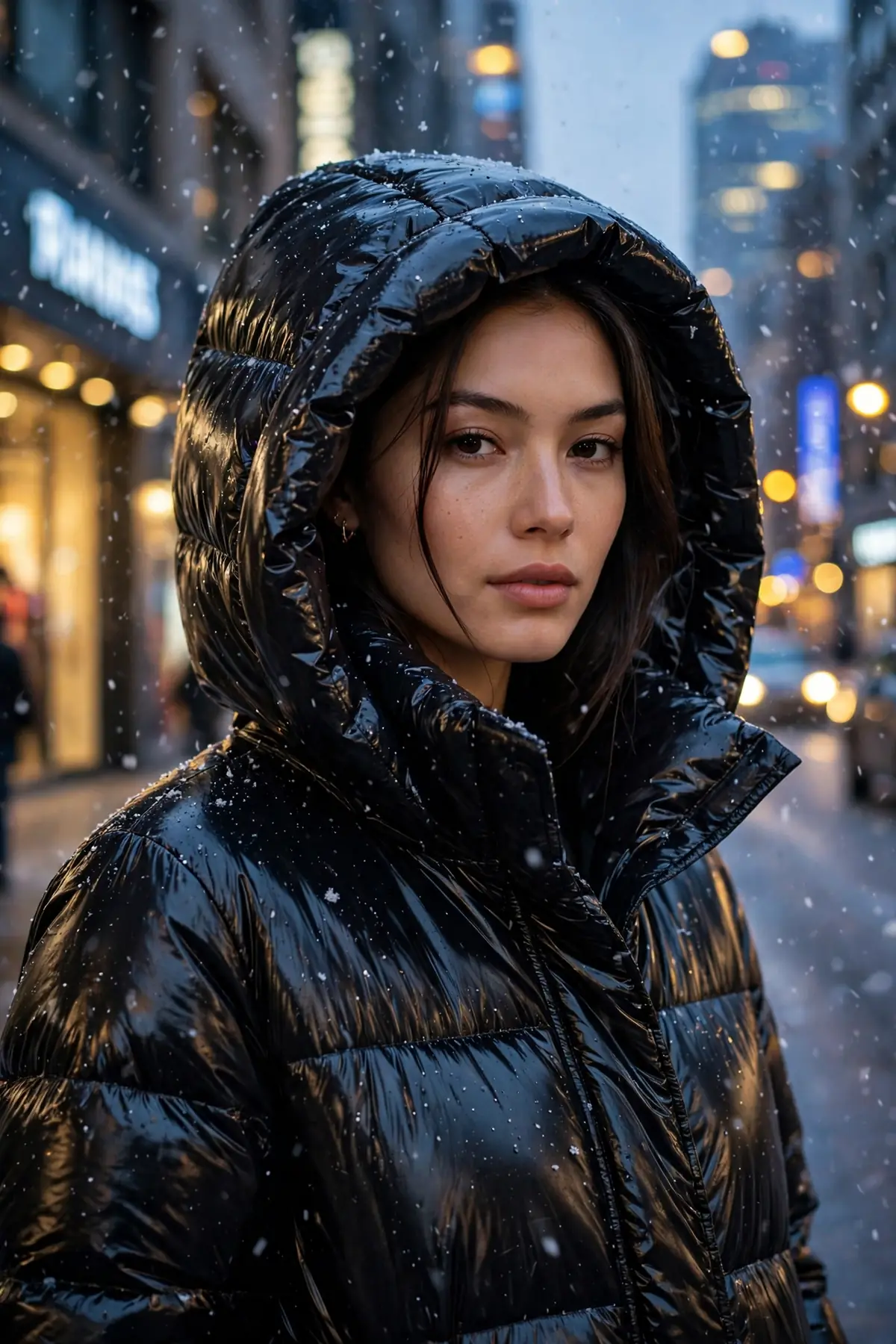
Styling a long wool coat is the easiest styling job in fashion, which is half the point. Over jeans and a white tee with loafers, it is the off-duty uniform. Over a silk blouse and tailored trousers, it is the office. Over a slip dress with heeled boots, it is the evening. The trick is the scarf: a long wool coat with a chunky knit scarf in a contrasting colour is the whole outfit, and it is the cheapest way to make last year's coat look like this year's. One more hot take: the rule that your coat must match your bag is dead. A camel coat with a black bag and black boots looks intentional; a camel coat with a camel bag and camel boots looks like a costume.
The Puffer, Grown Up
The puffer had an image problem for years: functional, yes, but shapeless, shiny, and about as elegant as a sleeping bag. Winter 2026 is the season the puffer grew up. The best winter coats for women 2026 include long puffers with a matte finish, a defined waist — either a belt, a drawcord, or clever quilting — and a collar that stands up against the wind instead of flopping open. The Aritzia Super Puff Long remains the benchmark for extreme cold, filled with 800-plus fill-power down and rated for temperatures that make most coats give up, and the high street has spent two years copying its formula at every price point: long, hooded, windproof, and cut to look like a coat rather than camping gear.
When you shop a puffer, ignore the shine and check three things. First, the length: knee-length or longer, because a hip-length puffer leaves your thighs to fend for themselves. Second, the hood: it should be adjustable and deep enough to actually stay up in wind, not a decorative flap. Third, the pockets: fleece-lined, zipped, and positioned where your hands naturally fall. Those three details separate the puffers that keep you warm from the ones that only look warm. And a word on colour: black is the safe choice, but the 2026 puffer comes in chocolate, forest green, burgundy and cream, and a coloured puffer is the easiest way to make a practical coat feel like a fashion choice.
Hot take number two: the puffer is not a casual-only coat. A long matte puffer over tailored trousers and heeled boots is a legitimate city look, and fashion editors have been wearing exactly that for two winters now. The old rule — puffer equals gym clothes — died the day luxury brands started selling puffers for four figures. Wear it with the tailored pieces, not just the leggings, and it stops reading sporty.
Teddy, Faux Fur and the Cosy Coats
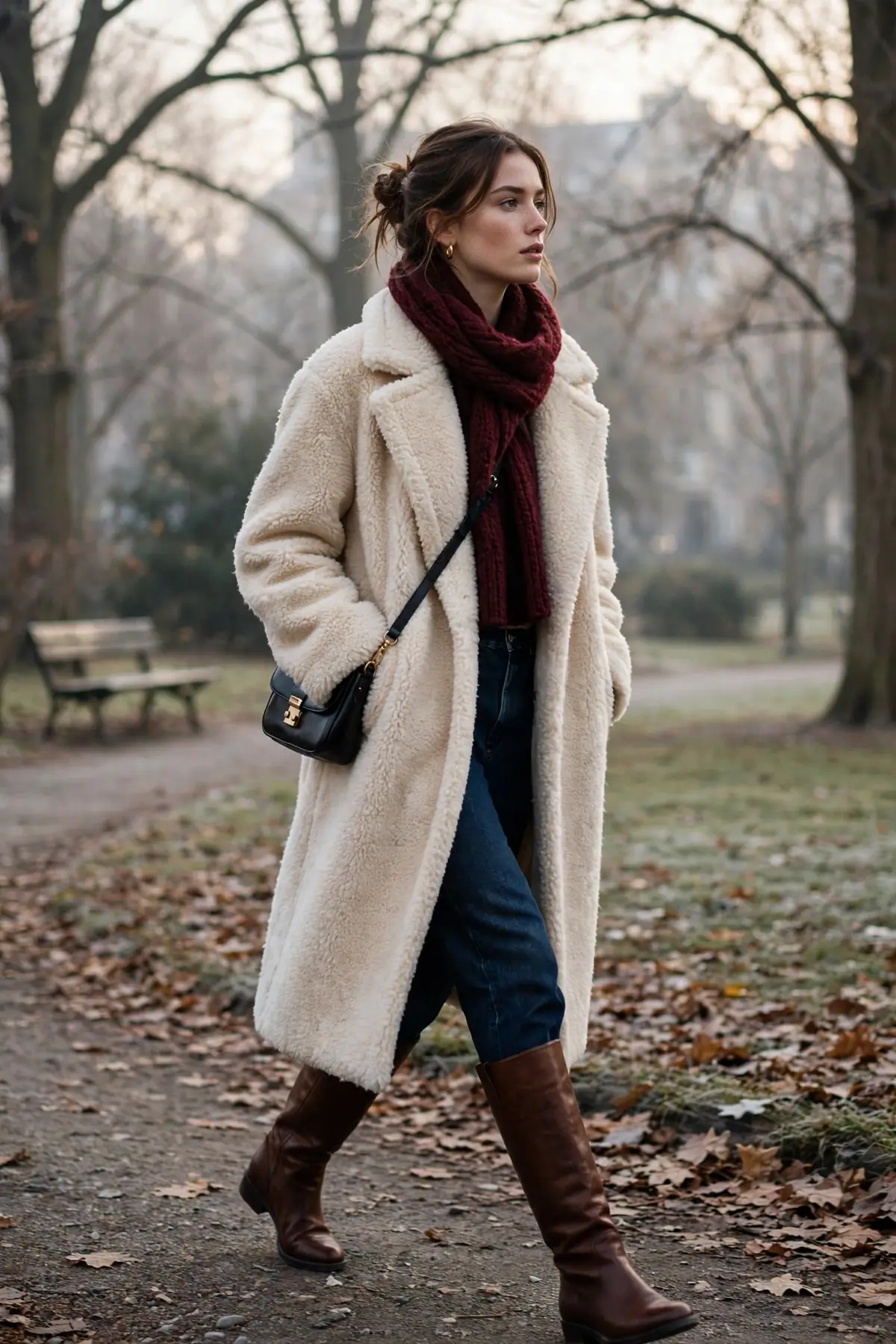
Some coats are bought with the head and some with the heart, and the teddy coat is pure heart: curly faux shearling, usually cream or caramel, oversized in the good way, and so comfortable that putting it on feels like a decision to be happy. It is not the warmest coat on this list — wind moves through that curly pile more easily than through a windproof shell — but layered over a chunky knit with a scarf, it handles most winter days, and it is the coat you will reach for on every weekend errand. Style it with straight-leg jeans and chunky boots, or with a knit dress and knee-high boots, and let the texture do the talking: everything underneath should be smooth and simple.
The faux fur coat is the teddy coat's glamorous older sister: shorter, sleeker, and made for evenings. A faux fur coat over a slip dress or a black turtleneck and wide-leg trousers is the fastest route to looking dressed-up in winter, and it is the coat that photographs best at every holiday party. The care note matters here: faux fur sheds when it is cheap and mats when it is mistreated, so brush it gently after wear and never hang it squashed between heavier coats. Buy the best faux fur you can afford — the difference between a $100 faux fur and a $250 one is visible from across the room.
Capes, Parkas and the Statement Coats
The cape coat is the silhouette for the woman who already owns the practical coats and wants the beautiful one. Structured at the shoulder, flaring gently over the body, it looks extraordinary over a dress — it was designed, essentially, to be worn over dresses — and it is the coat that gets compliments from strangers. Its weakness is honest: a cape does not seal against the wind the way a buttoned coat does, so it belongs to milder days and shorter outings, not to the hour-long wait for a delayed train. Think of it as the occasion coat, not the commute coat, and you will never be disappointed by it.
The parka is the opposite: the coat for weather that does not care about your plans. Waterproof, hooded, windproof, usually with a drawcord waist and deep pockets, the parka is what you wear when the forecast says freezing rain and you still have to go out. The 2026 parka has learned manners — slimmer cuts, matte fabrics, faux-fur-trim hoods that look deliberate rather than decorative — and the best ones, from brands like The North Face and Lululemon, pair down insulation with genuinely waterproof shells. If your winter is wet as well as cold, the parka should be your first purchase, not your second.
"A coat is the only item in your wardrobe that the whole world sees before they see you — buy the one that tells the truth about how you want to feel all winter."TrendThread style notes, winter 2026
The belted wool trench deserves its own mention, because it solves the problem the other coats ignore: the woman who wants a waistline. A tie-waist wool trench gives you the long, elegant line of a wool coat with a defined waist, and it layers beautifully over knits without adding bulk. It is the best travel coat on this list — it packs flatter than a puffer, looks smarter than a parka, and works from the airport to dinner without a change.
Budget vs Luxury: What the Extra Money Actually Buys
The honest answer to the budget question is that a winter coat is one of the few items where spending more usually buys something real — but only up to a point. At the budget end, under $150, you are buying the silhouette and the colour, and the warmth comes from the layers underneath. That is a perfectly legitimate strategy: a $120 wool-blend coat over a good thermal and a chunky knit will keep you warm, and you can replace it in two years without regret. In the middle, $200 to $500, you start buying construction: higher wool percentages, real down, better linings, windproof shells, and hardware that does not break in February. This is the sweet spot for most readers, and it is where the warmest winter coats for women are actually found — the coats that reviewers keep for five winters and counting.
Above $600, you are mostly buying fabric and name: cashmere blends, Italian wool, a designer label. Those coats are beautiful, and if you can afford one you will love it, but the warmth-per-dollar drops sharply. The exception is the extreme-cold parka and the heritage wool coat, where the expensive version genuinely outperforms the cheap one in weather that matters. Our rule: spend the most on the coat you wear the most days. If your coat is on your back 120 days a year, $400 works out to just over $3 a day. That is the cheapest confidence you will ever buy.
And do not forget the sale calendar, because timing is the easiest way to buy a better coat for less. The best winter coats for women 2026 go on their deepest discount in two windows: Black Friday week, when last season's colours drop 30 to 40 percent, and the last week of December, when stores clear winter stock before the spring lines arrive. The trap is waiting for the January sales and finding your size gone — the December peak in coat searches is real demand, and it empties the rails. If you find your coat in your size at a Black Friday price, buy it then. The coat will not get cheaper, and it will almost certainly get scarcer.
| Budget | Best pick | What you get |
|---|---|---|
| Under $150 | Wool-blend long coat or synthetic puffer | The silhouette and the colour; layer underneath for warmth |
| $150–$300 | Long down puffer or 80% wool coat | Real warmth, windproof shell, proper lining |
| $300–$600 | Wool-cashmere coat or premium parka | Heritage fabric, five-year construction, best fit |
| $600+ | Designer wool or extreme-cold parka | Cashmere blends, Italian wool, lifetime piece |
| Black Friday tip | Buy the $300–$600 coat on sale | Last year's colour, this year's warmth, 30–40% off |
Best Winter Coats for Every Body Type
Petite frames, the long coat is your friend, not your enemy — but the proportions have to be right. Choose a coat that hits just below the knee rather than at the ankle, with a defined waist or a belt, and wear it with a heeled boot so the line stays long. Skip the oversized, floor-skimming styles, which swallow a smaller frame, and skip the boxy cropped puffer, which cuts you in half. A single-breasted long wool coat in a dark colour, worn open over a monochrome outfit, is the most lengthening thing you own.
Tall frames, you can wear the drama the rest of us only dream about: the ankle-length wool coat, the full-length puffer, the cape over a maxi dress. Your risk is the opposite — coats that are too short in the sleeve and too tight across the shoulders. Check the sleeve length first, buy the tall size when it exists, and let the coat be the statement: a long camel coat on a tall frame needs nothing else. Curvy and plus-size readers, the coat rules are about structure, not size. A single-breasted coat with a defined shoulder and a tie waist skims beautifully; a double-breasted coat adds width where you do not need it. The long puffer with a drawcord waist is your best friend in extreme cold, because it gives you shape without squeezing. And for every body type, the fitting-room test is the same: sit down in the coat. If it pulls, rides up, or gaps when you sit, it is the wrong coat — you will spend all winter sitting in it.
Styling by Occasion: Office, Weekend, Evening and Travel
The office takes the long wool coat, full stop: over a silk blouse and tailored trousers, or over a knit dress with heeled boots, in camel, black or chocolate. Keep the scarf simple and the bag structured, and the coat does the professional work for you. The weekend takes the teddy coat or the long puffer: jeans, a chunky knit, boots that can handle slush, and a beanie you actually like. The evening takes the faux fur or the cape: over a slip dress or a black turtleneck and wide-leg trousers, with heeled boots and one piece of statement jewellery. Travel takes the belted wool trench or a packable long puffer: something that looks smart at the airport, survives being folded into an overhead bin, and works from a cold morning to a warm restaurant without a change.
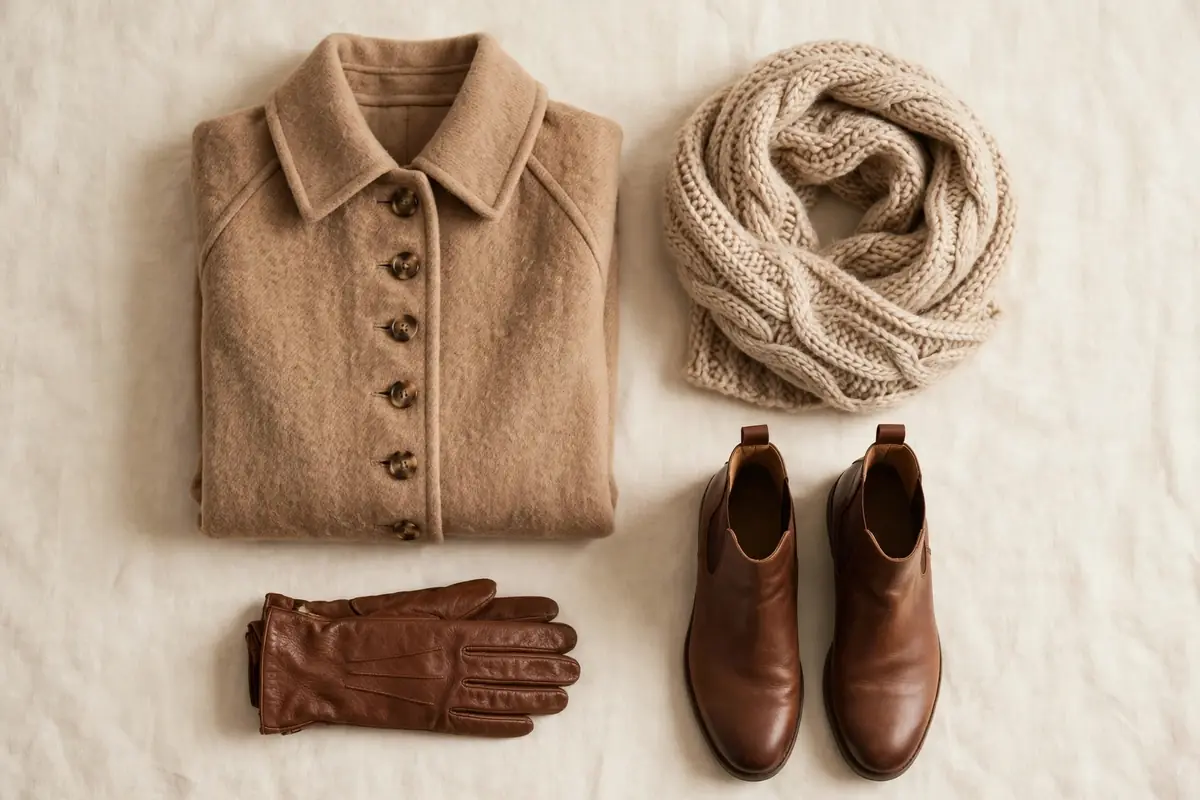
- The commute: Long camel wool coat, cream knit, dark jeans, heeled boots, leather gloves.
- The office: Black long wool coat, silk blouse, tailored trousers, pointed flats.
- The coldest day: Long black puffer, thermal base, chunky knit, snow boots, beanie.
- The weekend: Cream teddy coat, straight-leg jeans, chunky knit, knee-high boots.
- The evening: Faux fur coat, slip dress, heeled boots, statement earrings.
- The wet day: Waterproof parka, waterproof boots, knit dress, crossbody bag.
- The travel day: Belted wool trench, knit co-ord set, white sneakers, tote bag.
Fabric, Care and Making a Coat Last Five Winters
A good coat is a five-year relationship, and like any relationship it needs a little maintenance. Wool coats want a soft brush after every few wears — it lifts dust from the weave before it settles in — and a wide, sturdy hanger that supports the shoulders, never a wire hanger, which leaves points in the shoulders that no steamer will fix. Dry clean a wool coat once a season, not once a month; over-cleaning strips the natural oils from the fibre. Down puffers want the opposite treatment: wash them, gently, with a down-specific detergent, and tumble dry on low with clean tennis balls to restore the loft. A flat, clumpy puffer is usually a dirty puffer, not a dead one.
Storage matters as much as cleaning. At the end of winter, clean the coat before you put it away — moths eat the food stains, not the wool — and store it in a breathable garment bag, never plastic, which traps moisture. Cedar blocks beat mothballs, which smell like a grandmother's attic for reasons nobody enjoys. And the golden rule: never hang a wet coat in a closed closet. Let it air dry on a wide hanger first, or the damp will work its way into the lining and the smell will follow you into spring. For more on the season's outerwear, see Vogue's fashion coverage, Harper's Bazaar's fashion section, and Who What Wear's winter coat guides.
What to Skip: The Myths That Waste Your Money
Three myths to retire before you shop. Myth one: the most expensive coat is the warmest. Wrong — warmth is construction, not price, and a $250 long puffer with 700 fill-power down outperforms a $900 fashion wool coat on a freezing day. Myth two: you should size up in a coat so you can layer. Wrong — size for your thickest sweater, not for a fantasy of three sweaters, or the coat will hang off you like a borrowed tent. Myth three: a coat is a coat, buy it once and be done. Wrong — your life has a coldest day, a wettest day, and a dressiest day, and one coat cannot win all three. The two-coat system — one practical, one polished — is the only system that actually works.
Two things to skip in the shop. First, a coat with no lining, or a lining so thin you can see through it — the lining is where the warmth lives, and a coat without one is a costume. Second, a coat you have to talk yourself into. If you are standing in the fitting room listing reasons the coat is fine, it is not the coat. The right coat makes you stand up straighter the second you put it on. Trust that feeling; it is the only review that matters.
Ready to shop? Start with a long wool coat in camel or chocolate, add a long puffer coat for the coldest days, and finish with a teddy coat for the weekends you want to feel like a hug. The best winter coats for women 2026 are the ones you will still love in February, when the novelty is gone and only the warmth is left.
The 10-Point Coat Test: Use It in Every Fitting Room
Print this in your head before you shop, because it turns a vague feeling into a decision. One: the shoulder seam sits on your shoulder. Two: it closes over your thickest sweater without pulling. Three: the sleeves reach your wrist bone. Four: you can raise your arms without the whole coat riding up. Five: you can sit down in it comfortably. Six: the pockets are deep enough for your hands and your phone. Seven: the collar stands up against your neck when you want it to. Eight: the lining is full and smooth, with no loose threads. Nine: the buttons, zip or toggles close with one hand — because you will be closing them with gloves on, in the cold, holding a bag. Ten: you stand up straighter when you put it on. A coat that passes all ten is the coat. A coat that fails three or more is a coat you will regret by January.
One last shopping note, and it is the most practical one in this whole guide: buy your coat before December. Search interest in women's winter coats peaks in December, and that peak is not an abstraction — it is the month the good sizes sell out, the popular colours disappear, and the price goes back up after the Black Friday sales end. The best winter coats for women 2026 are still on the rail right now, in your size, at a sale price. In three weeks they will not be.
FAQs: Best Winter Coats for Women 2026
What is the best winter coat for women in 2026? The long wool coat is the best all-round buy for most women — polished, warm enough with a knit underneath, and wearable everywhere. For extreme cold, the long down puffer wins outright. Buy the wool coat first, the puffer second.
Are long puffer coats still in style for winter 2026? Yes — the long puffer is one of the defining coats of winter 2026, now in matte finishes with defined waists and better tailoring. It is the warmest coat you can buy and no longer reads as purely sporty.
How much should I spend on a winter coat? The sweet spot is $200 to $500, where you get real construction: high wool percentages, real down, windproof shells and proper linings. Under $150 works if you layer well; above $600 mostly buys fabric and label rather than warmth.
What is the warmest type of winter coat? A long down puffer with 700-plus fill power and a windproof shell is the warmest option for dry cold. For wet cold, a waterproof down parka wins, because down loses its insulation when it gets wet.
How should a winter coat fit? The shoulder seam should sit on your shoulder, it should close over your thickest sweater without pulling, and the sleeves should reach your wrist bone. Sit down in it before you buy — if it pulls or gaps when seated, it is the wrong coat.
Is a wool coat warm enough for winter? A wool coat with at least 80 percent wool, a full lining and a knit underneath handles most winter days down to around 20 degrees. Below that, or in strong wind, switch to a long puffer or parka.
When is the best time to buy a winter coat? Now — late fall, before the December demand peak, when sizes and colours are still available and Black Friday sales cut 30 to 40 percent off last season's colours. January sales are cheaper but the good sizes are gone.
So here is your winter assignment: try on the long wool coat and the long puffer in the same trip, wear your thickest sweater to the shop, and buy the one that makes you stand up straighter. The best winter coats for women 2026 are not about surviving the cold — they are about walking out into it like you own the season. Browse the shop section and read more in the journal. Winter is coming either way. You might as well look magnificent in it.
Part of the TrendThread hubs: Winter 2026 hub