TrendThread Journal
The one-detail method: brooches, gloves and hair combs
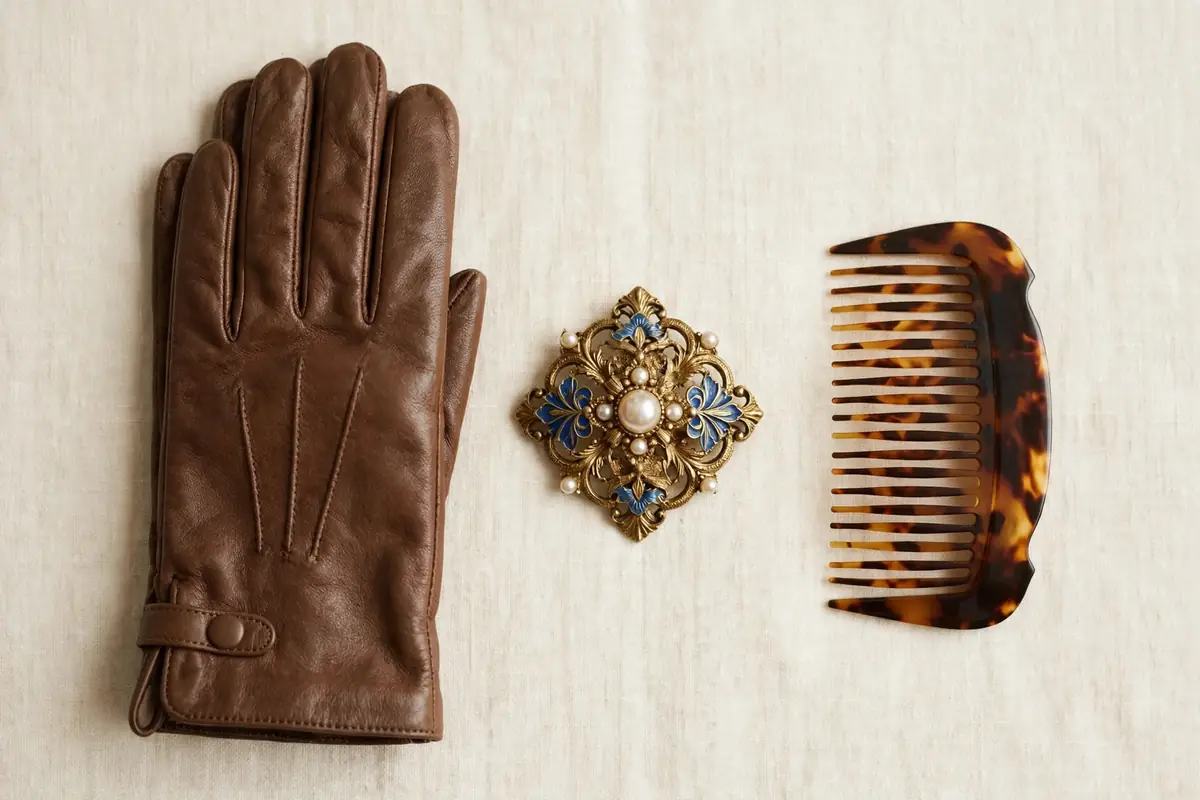
One vintage-minded accessory can shift familiar basics. Pin a brooch on a lapel, add leather gloves to a simple coat, or swap a claw for a polished comb.
One vintage-minded accessory can shift familiar basics. Pin a brooch on a lapel, add leather gloves to a simple coat, or swap a claw for a polished comb. That is the whole method, and it is almost suspiciously simple — which is why it works. Most outfits fail not because they are missing something, but because they are wearing too many somethings at once. One detail says intention. Five details say you could not decide. The one-detail method is the discipline of choosing the single thing that makes the outfit, and letting everything else be quiet.
Think of it as a spotlight. An outfit is a stage, and a spotlight can only point at one thing at a time. Point it at a brooch, and the coat underneath suddenly looks curated. Point it at gloves, and a simple coat looks like an occasion. Point it at a hair comb, and a plain sweater-and-jeans day looks finished. Point it at everything, and the stage is just bright and confusing. The method is not minimalism for its own sake; it is editing. It trusts that your base outfit is already good, and gives it one reason to be remembered.
Detail one: the brooch, back from the attic
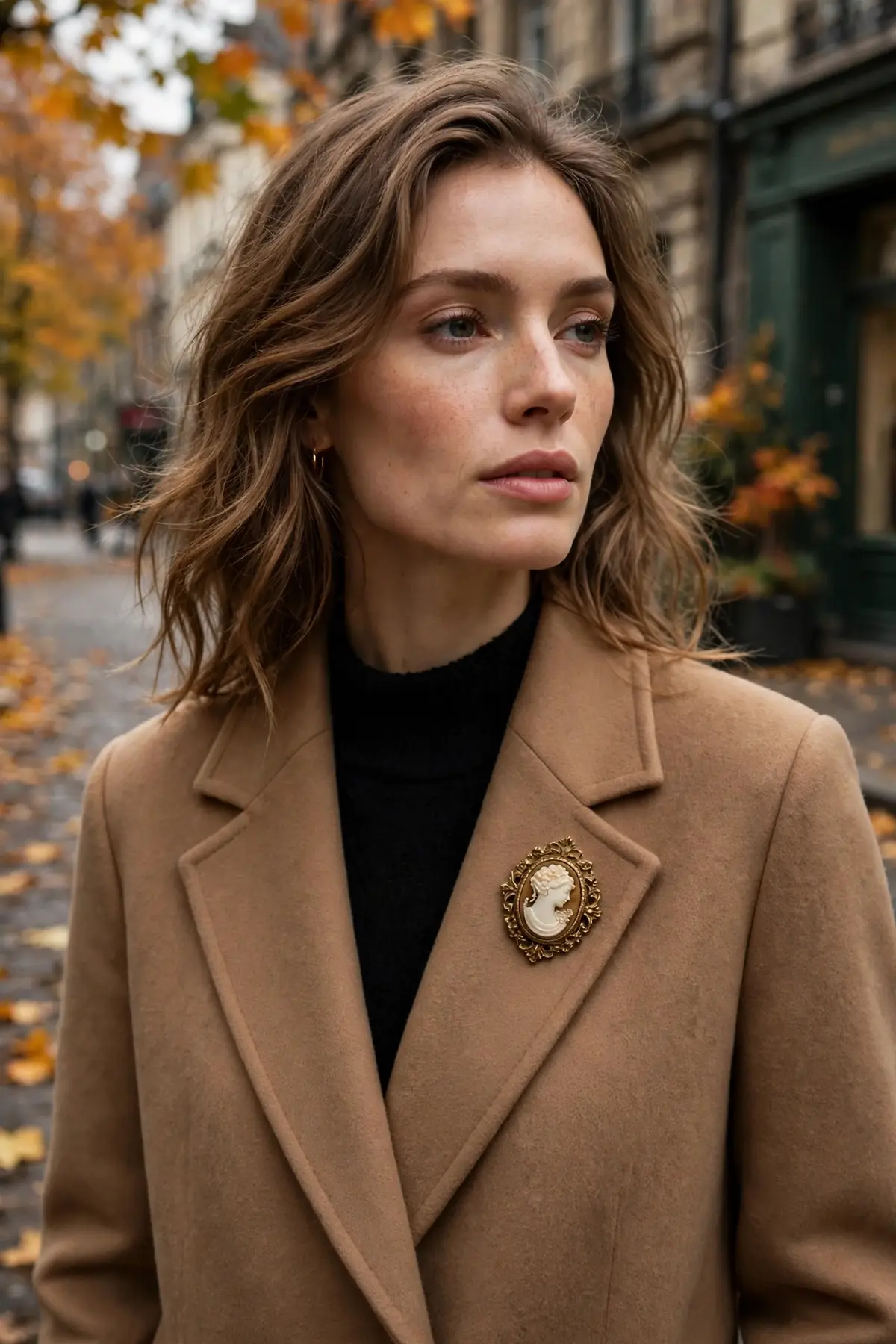
The brooch is the comeback nobody expected and everybody needed. It spent decades in jewelry boxes, associated with grandmothers and formality, and then it returned — on lapels, on scarves, on hats, on bags — worn by people who understood that a brooch is the fastest way to make a simple coat look like a considered choice. Pin one on a lapel, slightly off-center, and a plain camel or black coat becomes an outfit. Pin one on a scarf, at the knot, and a basic knit looks styled. Pin one on a beret or a tote, and the whole day feels a little more deliberate.
Choosing a brooch is half the fun. Vintage shops and flea markets are full of them for very little money, and the best ones are not the most expensive — they are the ones with a shape or a stone that makes you smile. A small gold insect, a pearl cluster, a deco-style geometric piece: any of them works, as long as it is one, and as long as it is pinned securely. Test the pin before you leave the house, especially on heavy coats, because a brooch on the pavement is a sad end to a good idea. And keep the rest of your jewelry minimal on brooch days. The brooch is the detail. Let it be.
Detail two: leather gloves, the quiet luxury
Leather gloves are the accessory that makes people assume you have your life together, even when you do not. Add them to a simple coat and the outfit gains a polish that no scarf or hat quite delivers, because gloves are both practical and slightly formal — they suggest you thought about the whole outfit, hands included. Black is the workhorse, but brown, burgundy or oxblood gloves can be the detail that ties an outfit together, especially when they echo a bag or a shoe.
Fit matters more with gloves than with almost any other accessory. Too big, and they look borrowed; too small, and they are uncomfortable within minutes. Try them on, flex your fingers, hold a phone, hold a bag handle. The right pair should feel like a second skin, not a costume. And care for them: leather conditioner once a season, keep them out of radiators, and store them flat rather than balled up. A good pair of leather gloves, cared for, lasts years — which makes them one of the cheapest luxuries in a closet, measured in wears per winter.
Detail three: the polished comb, and the hair decision
Swap a claw clip for a polished comb and something subtle happens: the whole outfit looks more finished, even though you changed nothing else. Hair accessories are powerful precisely because they are near your face, where people actually look. A tortoiseshell comb, a gold slide, a simple velvet headband — any one of them, worn with an otherwise simple outfit, reads as grooming rather than decoration. It says you finished the outfit, not just the clothes part of it.
The rule is the same as with brooches: one hair detail, not three. A comb plus a headband plus statement earrings is a collection, not a detail. Choose the comb, keep the earrings small, and let the hair be the frame rather than the competition. This is especially useful on days when you are wearing a repeat outfit — the same coat and jeans as last week, but a different hair detail, and the outfit feels new without buying anything. That is the one-detail method at its most economical: newness from a ten-minute change, not a shopping trip.
How to choose today's one detail
Choosing is a skill, and it gets easier with a simple question: what does this outfit need — warmth, polish, color, or personality? If the outfit is all neutrals and feels flat, it needs color: an oxblood glove or a jewel-toned brooch. If it is polished but cold, it needs warmth: leather gloves, a soft scarf worn simply. If it is casual and feels unfinished, it needs polish: the comb, a slim belt, a structured bag. If it is correct but boring, it needs personality: the vintage brooch with a story, the unusual comb, the gloves in an unexpected color. One question, one answer, one detail. Done.
Also consider the day. A brooch is perfect for a lunch or a meeting, less practical for a day of carrying boxes. Gloves are perfect for a cold commute, pointless indoors all day. A comb is perfect for a day when your hair needs managing, unnecessary when it is already behaving. The best detail is not the prettiest one you own; it is the one that suits the day you are actually having. That practicality is what separates styling from dressing up — styling serves the day, dressing up serves the mirror.
One detail, many outfits: the repeat test
The best one-detail pieces pass a repeat test: can you wear them with at least five outfits you already own? A gold brooch passes easily — coats, blazers, scarves, hats, bags. Black leather gloves pass even more easily. A tortoiseshell comb passes with anything, because hair goes with everything. If a detail only works with one outfit, it is not a method piece; it is a costume piece, and costume pieces should be bought rarely and loved specifically, not relied on daily.
This is where the method connects to the rest of a smart closet. The same logic that makes a 12-piece capsule work — few pieces, many combinations — makes one-detail dressing work: few details, many outfits, each combination feeling distinct because the detail changes the emphasis. A camel coat with a brooch is a different outfit from the same coat with gloves, even though only one thing changed. That is styling leverage, and it is free, once you own the details.
What to avoid: the detail pile-up
The classic mistake is enthusiasm. You discover brooches, and suddenly you are wearing a brooch, statement earrings, a bold scarf, a patterned bag and a hat, all at once, and the outfit looks like a vintage shop exploded. Enthusiasm is good; editing is better. If you add a detail and the outfit feels louder, take something else away. The method works by subtraction as much as addition. A good test: take one thing off before you leave the house. If the outfit still works — and it almost always does — you have just practiced the method, whether you meant to or not.
Another trap is matching too hard. A brooch, gloves and bag all in the exact same shade can look like a set, and sets look costumed. Let details relate, not match: a burgundy glove with a camel coat and a gold brooch is related by warmth, not by exact color, and it looks collected rather than purchased as a set. Collected is the goal. Collected looks like a person with taste and a history, not a person with a shopping list.
Starting your own one-detail collection
Start with three pieces, one from each family: one brooch you love, one pair of leather gloves that fit perfectly, one hair comb or slide that suits your hair. That is a complete starter kit, and it costs less than one impulse sweater. Wear each one for a week, one detail per day, and notice which days feel best. You will learn your own taste faster from wearing than from shopping — which details you reach for, which ones you forget, which ones earn compliments and which ones just earn comfort. Both kinds of feedback count.
Then, and only then, add slowly. A second brooch in a different mood, gloves in a second color, a scarf pin for winter coats. Each addition should pass the five-outfit test and the one-detail rule: it should work alone, not need backup. Over time, you will have a small box of details that transforms a closet you already own, outfit by outfit, day by day. One vintage-minded accessory can shift familiar basics — and a small box of them, worn one at a time, can shift a whole wardrobe. That is not a small thing. That is styling, in its most useful, most wearable form.
Part of the TrendThread hubs: Fall 2026 hub · Capsule & Formulas hub