TrendThread Journal
The 30-wear test: a better question before checkout
Instead of asking whether a piece is exciting now, ask whether you can picture 30 realistic wears across seasons, settings and combinations you already own.
Instead of asking whether a piece is exciting now, ask whether you can picture 30 realistic wears across seasons, settings and combinations you already own. That is the 30-wear test, and it is the simplest, most honest shopping rule there is. It does not ask you to stop buying clothes. It asks you to buy clothes you will actually wear — thirty times, in real life, not in a fantasy where you suddenly attend galas every weekend. A piece that passes is almost always worth its price. A piece that fails is almost always a future charity bag item, no matter how good the discount looks today.
The test works because excitement is a terrible shopping advisor. Excitement is about novelty, and novelty fades fast — usually by the third wear, when the piece is no longer new and has to survive on its actual merits. Thirty wears is long enough to get past novelty and into reality. It forces you to think about the boring, decisive questions: does it go with what I own? Does it fit my actual week? Will I still like it when it is not new anymore? Those questions are less fun than “do I love it right now?”, but they are the ones that build a wardrobe instead of a collection of impulses.
How to run the test, in two minutes
Stand in the shop — or stare at the product page — and count. Not vaguely, actually count: name outfits, one by one, until you reach thirty, or until you get stuck. Outfit one: with dark jeans and sneakers. Outfit two: with trousers and boots. Outfit three: with a skirt and a blazer. Keep going. If you can name thirty combinations using clothes you already own, in settings you actually go to, the piece passes. If you stall at six, or if every outfit requires a future purchase — “well, if I also buy those shoes…” — the piece fails, and you should put it back, no matter how pretty it is.
Be strict about the rules, because the test only works if you are. Combinations must use things you already own, not things you plan to buy. Settings must be real: work, weekends, errands, dinners you actually attend, not weddings you might be invited to. Seasons must be honest: a linen piece that only works in high summer cannot honestly reach thirty wears in a temperate climate unless you wear it constantly, and a heavy coat cannot reach thirty in a mild winter. Count real wears, not theoretical ones. The test is not a puzzle to solve; it is a reality check to respect.
What counts as a wear?
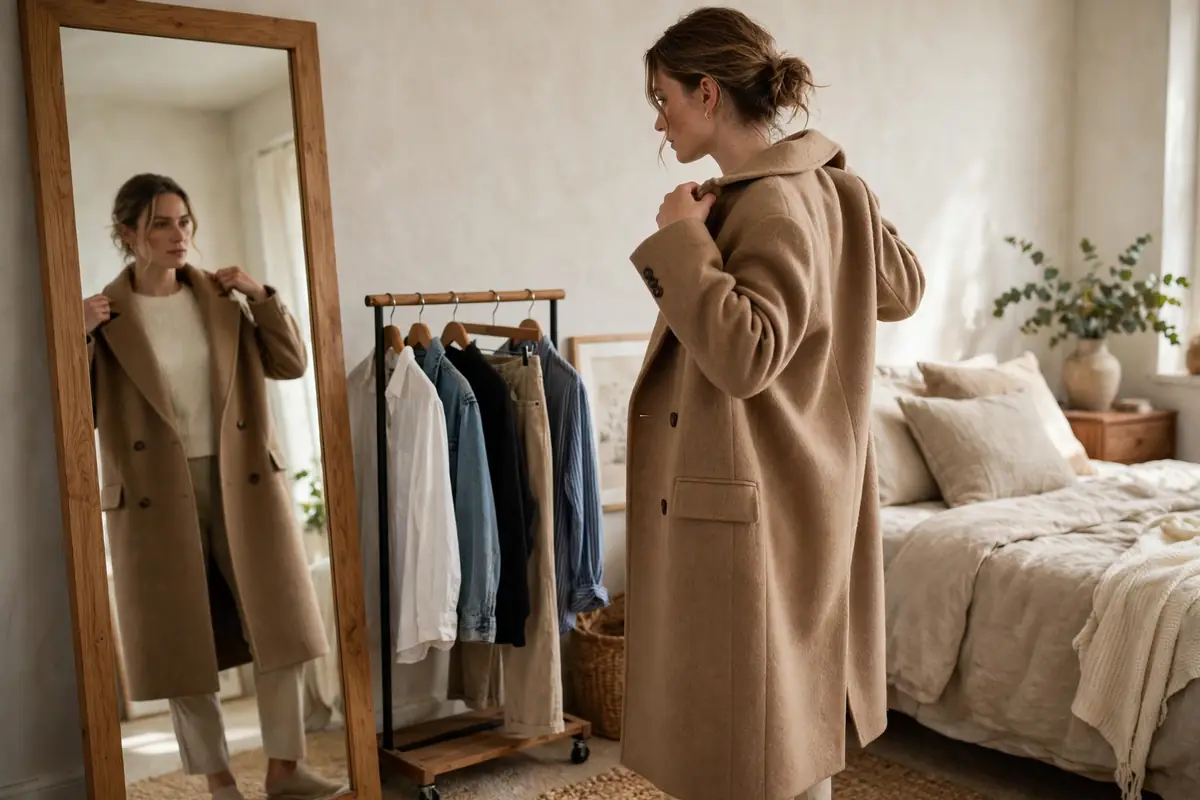
A wear is a full day out in the piece, not a try-on, not a photo, not a “well, I wore it to the shop to return something.” Thirty wears means thirty days when the piece did a job in your life. That sounds like a lot, and it is meant to — it is the difference between a staple and a novelty. A good pair of dark jeans reaches thirty wears in a season without trying. A good blazer reaches it in a few months. A statement dress might take years, which does not make it a bad purchase — it makes it a different kind of purchase, one you should make deliberately and rarely, not by accident every weekend.
Cost per wear is the math that follows naturally. Divide the price by thirty. A $150 coat that passes the test costs $5 per wear — cheaper than a coffee. A $40 top that fails at six wears costs almost $7 per wear, and it clutters your closet in the meantime. This is why “expensive” and “cheap” are misleading labels. The most expensive item in your closet is the one you never wear; the cheapest is the one you wear fifty times. The 30-wear test turns that insight into a habit, one purchase at a time.
The pieces that pass easily — and why
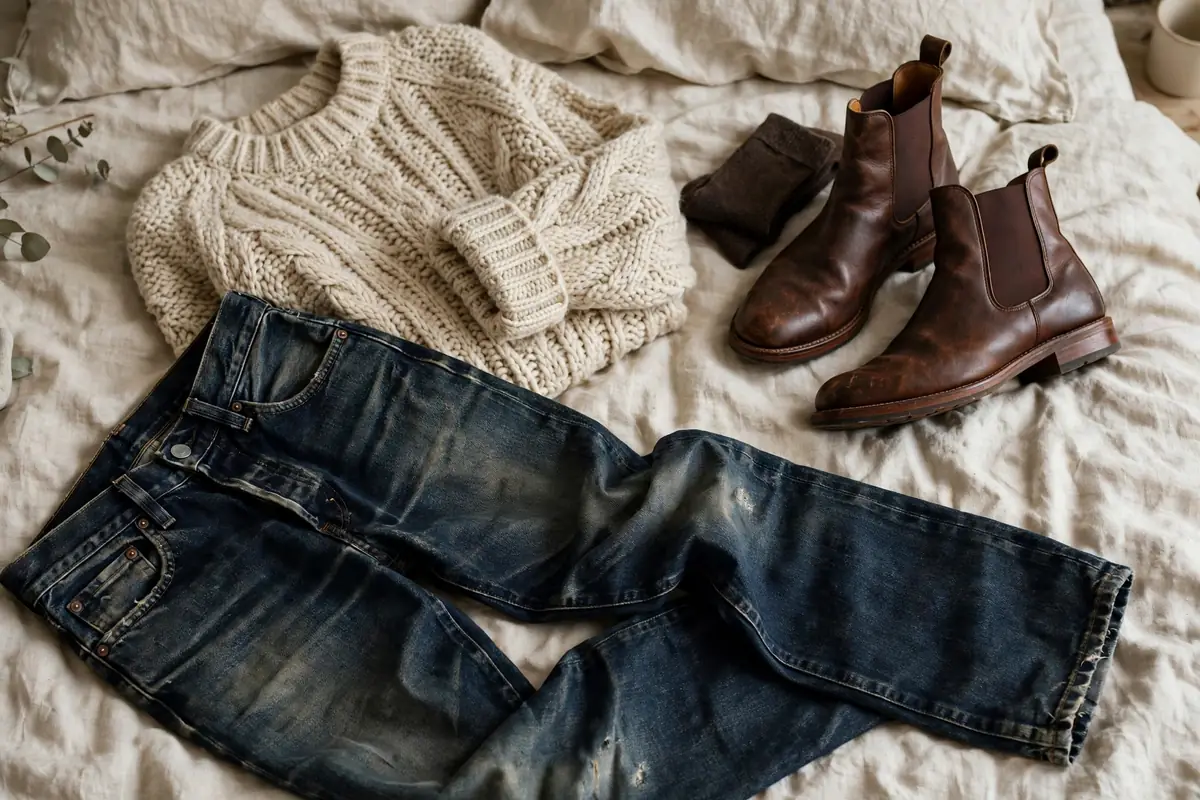
Neutrals pass easily, because they combine with everything. Dark denim, a black knit, a camel coat, a white shirt, a structured bag: these are the pieces that reach thirty wears almost by accident, because they never clash and never demand a specific partner. Dark wide-leg jeans are a perfect example — one pair, dozens of tops, shoes and layers, work and weekend alike. So are clean white lace-up sneakers, which slot into outfits you already own instead of demanding new ones. If you are building a wardrobe from scratch, start here: the pieces that pass the test without effort are the foundation everything else stands on.
Simple shapes pass, too. A straight skirt, a relaxed blazer, a fine knit — shapes that do not depend on a trend to look right will still look right in three years, which gives them time to reach thirty wears and beyond. Complicated shapes — extreme proportions, unusual cutouts, very specific silhouettes — can be gorgeous, but they combine with fewer things and date faster, which makes thirty wears a steeper climb. That does not mean never buy them; it means buy them knowingly, as statement pieces, not as everyday workhorses.
The pieces that usually fail — and the exceptions
Occasion pieces fail most often, because their occasions are rare. A sequin dress, a formal gown, a very specific holiday outfit: beautiful, but how many galas, weddings and parties do you actually attend in a year? If the honest answer is three, then thirty wears will take a decade, and the piece will likely go out of style — or out of fit, or out of your life — long before it gets there. The exception is the occasion piece you genuinely love and will wear repeatedly to different occasions, restyled each time. If you can picture it at five weddings, three dinners and two holidays, restyled each time, it might pass on a longer timeline. Be honest about whether you will actually restyle it, or whether you will wear it once and photograph it forever.
Trend pieces fail next. The ultra-specific trend — a very particular print, a very particular silhouette that only works one way — often stalls at six or seven wears, because it only goes with a narrow set of partners and it feels dated quickly. Again, exceptions exist: a trend piece in a neutral color, in a classic shape, can outlive its trend and keep earning wears. A leopard shoe in a classic loafer shape will outlast a leopard shoe in a trend shape, because the shape, not the print, decides longevity. When in doubt, buy the trend in the classic shape, and let the trend be the accent, not the whole piece.
Using the test for what you already own
The test is not just for shopping; it is for editing, too. Go through your closet and ask, for each piece: have I worn this thirty times? Will I wear it thirty times from now? Pieces that have already passed are keepers, even if they are worn — wear is proof of value, not a flaw. Pieces that have not passed and will not pass are candidates for selling, donating or passing on. This is gentler than a ruthless clear-out, because it is based on evidence, not guilt. You are not throwing away clothes because you “should” have less; you are keeping the clothes that actually serve you, and releasing the ones that do not.
This is also how a 12-piece capsule gets built honestly: not by buying twelve new things, but by finding the twelve things you already own that pass the test most easily, and building around them. Your capsule is already in your closet, hiding among the orphans. The test just helps you see it. And when you do buy, buy to fill gaps in that capsule — the blazer that unlocks five outfits, the shoe that works with everything — rather than buying another orphan to keep the others company.
When to break the rule, honestly
Rules need exceptions, or they become punishments. Break the 30-wear test for three things, deliberately: true occasion pieces you have a real occasion for, sentimental pieces that matter for reasons beyond wear count, and the occasional pure-joy purchase that makes you happy every time you see it, even if you wear it rarely. The key word is deliberately. An exception you choose, knowing it is an exception, is a good purchase. An exception you slide into because you did not run the test is just an impulse with better PR.
Also, adjust the number to your life. Thirty is a good default, but a student, a new parent, a person rebuilding a wardrobe after a move — all have different realities, and a twenty-wear test honestly applied beats a thirty-wear test fudged. The number matters less than the habit: pausing, counting, and asking whether this piece will actually live in your life, or just visit your closet. That pause is the whole method. Two minutes, before checkout, every time.
The long game: a closet that pays you back
Over a year, the test changes how you shop without you noticing. You buy less, because fewer pieces pass. You buy better, because the pieces that pass tend to be better made — cheap pieces rarely survive thirty wears in good shape, so the test quietly steers you toward quality. You get dressed faster, because everything in your closet goes with everything else. And you stop feeling guilty about your closet, because every piece in it earned its place by being worn, not by being wanted once in a shop.
So next time you are holding something exciting, pause and count. One, two, three outfits — keep going. Can you reach thirty, honestly, with things you own, in a life you actually live? If yes, buy it and wear it this week, and enjoy every one of those thirty wears and the ones after. If no, put it back with gratitude — it was a lovely idea, just not a thirty-wear idea — and walk out with a closet that is a little lighter and a lot more useful. That is not restraint for its own sake. That is the best question before checkout, asked thirty times over, and answered in your favour.
Part of the TrendThread hubs: Capsule & Formulas hub